* *
*
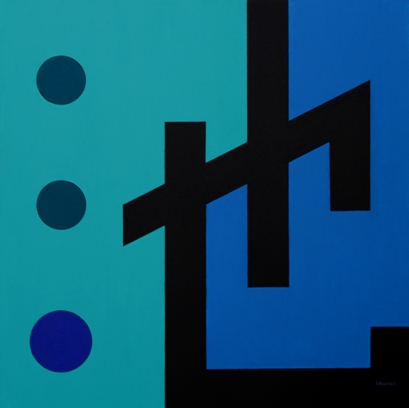
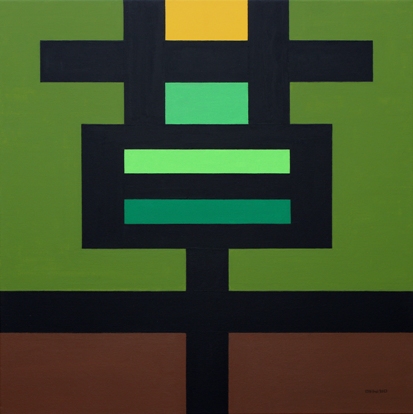
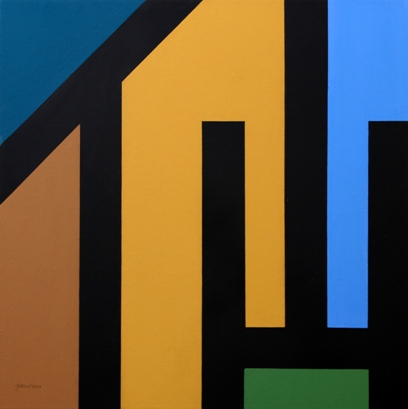
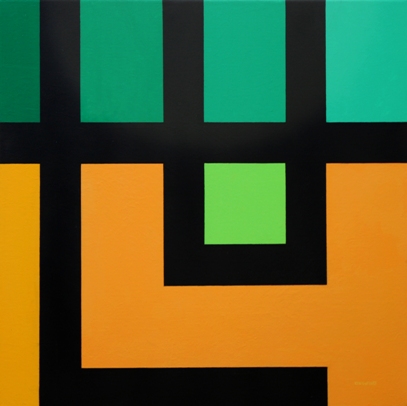
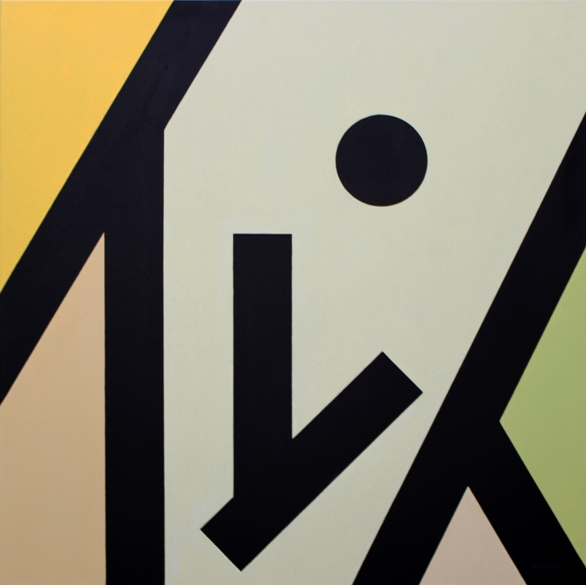
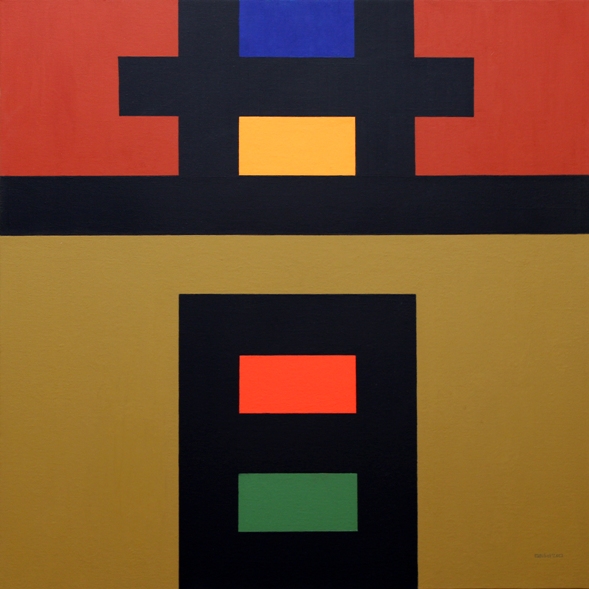
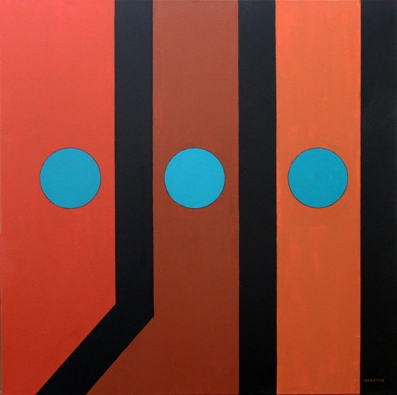
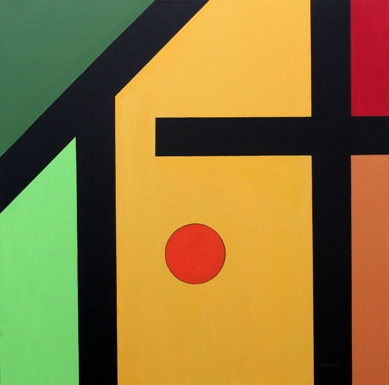
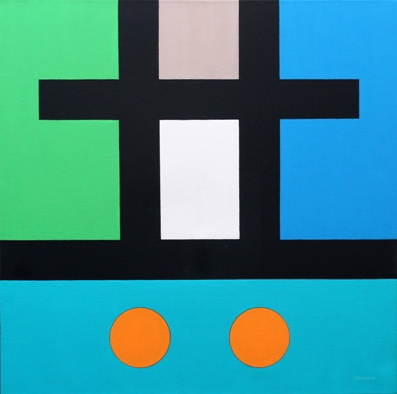
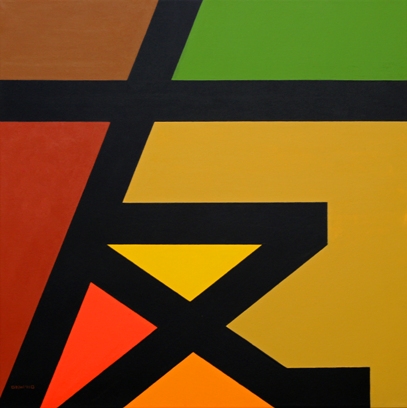
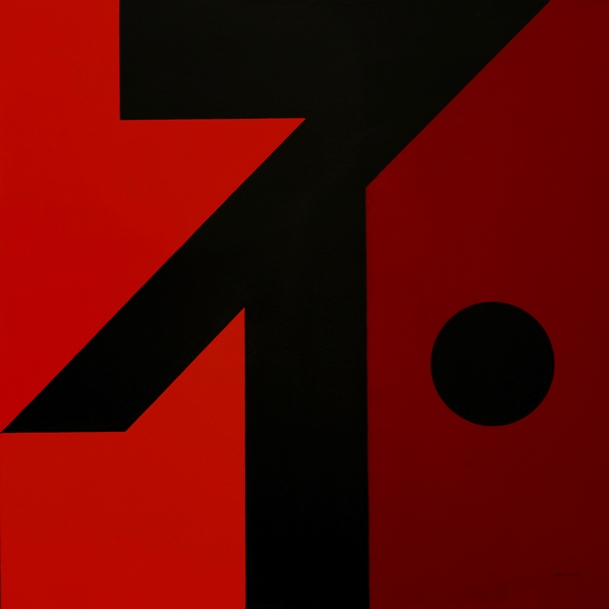
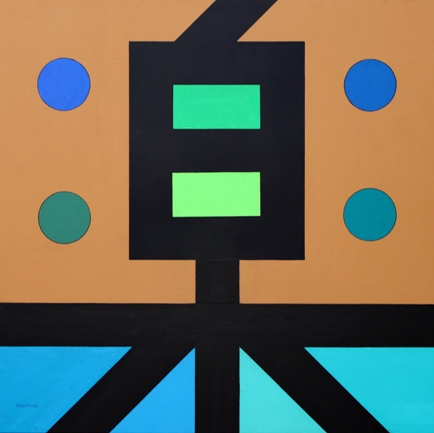
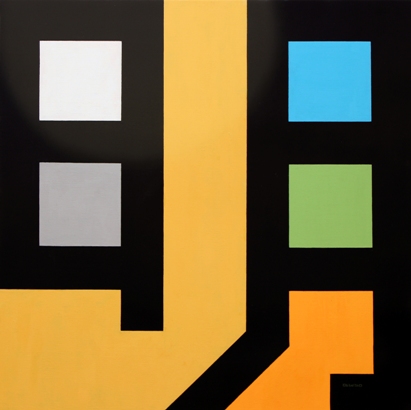
Quartet of Ideograms:
After a creative hiatus of 6 months during which the new book Resonance was
published, comes a return to Chinese ideograms in a different stylistic
exploration. Chosen for their spatial arrangement of strokes and spaces, not for
meaning, four ideograms serendipitously could be arranged, with poetic license,
to an interesting sentence.
* *
*
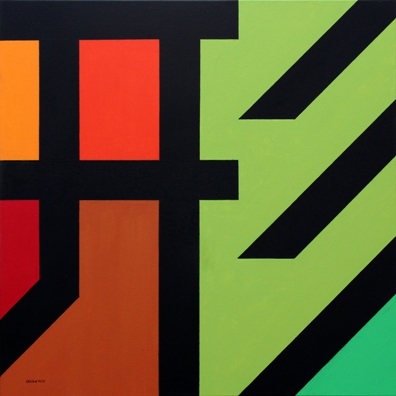
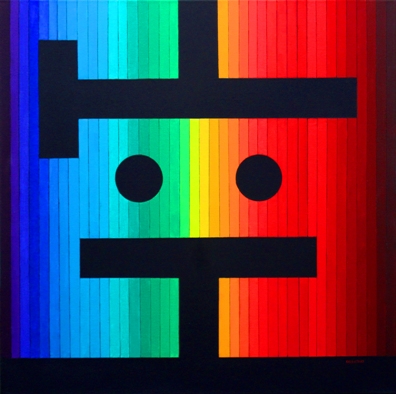
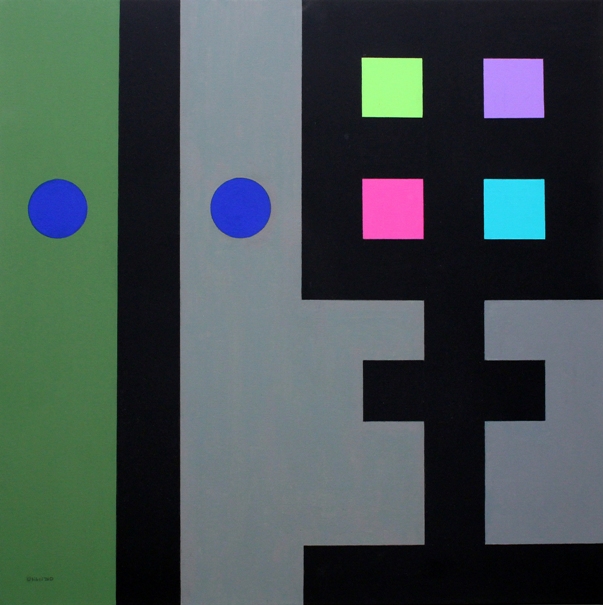
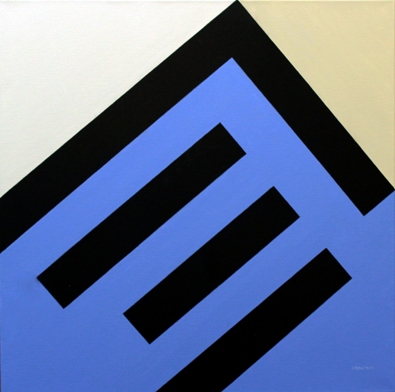
The diptych
Form / Emptiness
are derived ideograms referring to the Buddhist Heart Sutra (the core of the
large philosophical Prajaparamita treatise), which states "form is emptiness,
emptiness is form." It points toward process metaphysics, behavioral attributes,
quantum fundamentals and observational dependency, concluding that existence is
not based on nouns or stuff but on gerunds, verbal actions that serve as nouns,
and are mutually dependent.
In English, the first character is translated to "form," but Chinese has several
characters that are synonyms pertaining to form. The sutra ideogram itself,
found in Korea and Japan as well, variously means, depending on context (usually
specified by a follow-up ideogram), appearance, or hue, or substance, or the
material world; however, artistically, aesthetically it is inferior to the one
substituted for this work, which means appearance, shape, and form by structure
or conceptual category. A third ideogram synonym might have worked in the sutra,
as it refers to domain, territory, boundary, or indeed the world itself,
everything in perceptive existence.
[The painting Form
is self-referential via brush strokes. The form of the Form ideogram has common
vertical brushing while the green background space is irregular, turbulent,
chaotic.]
The second stylized Chinese character in the sutra is typically translated as
emptiness or void or space or hole. These meanings imply duality in being absent
with respect to something. Another way to translate it, particularly for this
sutra (which presents paradox), is "no-thingness."
The background of this
painting Emptiness
suggests a rainbow or prismatic color spectrum. A rainbow from ancient times has
been a symbol of a non-thing thing. A rainbow is not a substance, but an
untouchable appearance dependent on the angle of observation [40-42°] with water
droplets serving as a prism that splits composite white light into the spread of
component hues. We nonetheless name that form and can describe it, hence
becoming perceptively real, but it does not exist alone.
In Daoism, Lao Tzu's treatise begins with "the Dao that can be named is not
Dao." In the Bible, the first act Adam assigned himself was to name the beasts
in the field and birds in the air, everything in the world, hence causing
separation and differentiation. In the quantum world, the packet of energy that
comes out of the void, or itself, can act as a particle that individually and
collectively behaves as a wave depending on observational/detectional design. In
the Hindu Upanishads, the expression is neti, neti, not this, not that. In the
common world, we concretize the metaphor.
* *
*
The circle and sphere have a
self-contained completeness to them; they are happy forms, as a child's
balloon. During Christmas, the ornamental, shiny spheres and round lights
support joy. The close-up of such a tree, the painting
Christmas,
attempts to express this emotion. The positive, cheerful appearance of the
circular ornaments and multi-colored lights has a experiential and neurological basis, as determined by functional MRI imaging. The processing of rounded forms involves different brain regions
than sharp, angular shapes. Consider how the rounded faces and larger rounded
eyes of babies, both human and animals, bring calm and compassion, while
triangles and a multitude of lines, suggesting spikes, thorns, and insect legs,
are viewed as hazards. With such contrasting shapes in the painting — as well as
an actual decorated tree — undergoing the combination of brain activity, the circular
elements dominate and provide relief and pleasure. The solid colored smaller
circles as lights are crucial in feelings of warmth and fun. The association with
the season and religious/spiritual relationship with circular
purity and unity also comes into play.
* *
*
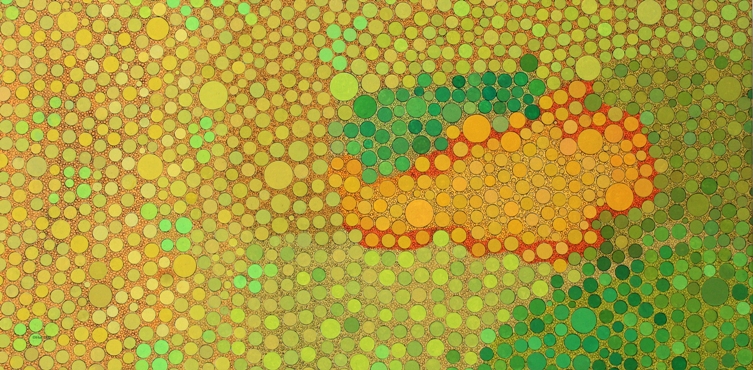
The viewer of this painting may
enjoy the eye play of circles and be philosophically aware of the emotional
responses to the appearance of changing patterns. The scientist, however, will
appreciate that
Lizard
is the idealized depiction of the skin of these creatures, based on the desert green
lizard and the tropical chameleon.
* *
*
Classic and traditional, the still
life [besides a study device for developing technique] emphasizes composition,
balance, and color harmony however many the elements. Moreover, it presents a
means to appreciate the simplicity and form of common objects, finding beauty
and interest in shape, texture, hue, and tone. The very painting style in still
life can create a mood that supports reflection on life, transience, and
cultural meaning, a visual metaphor. It pauses our thoughts and instills
tranquility. Bibel's only still life,
The Circle of Still Life,
continues her artistic meditation on the circle, here found in all the East-West
manufactured and natural components.
* *
*